
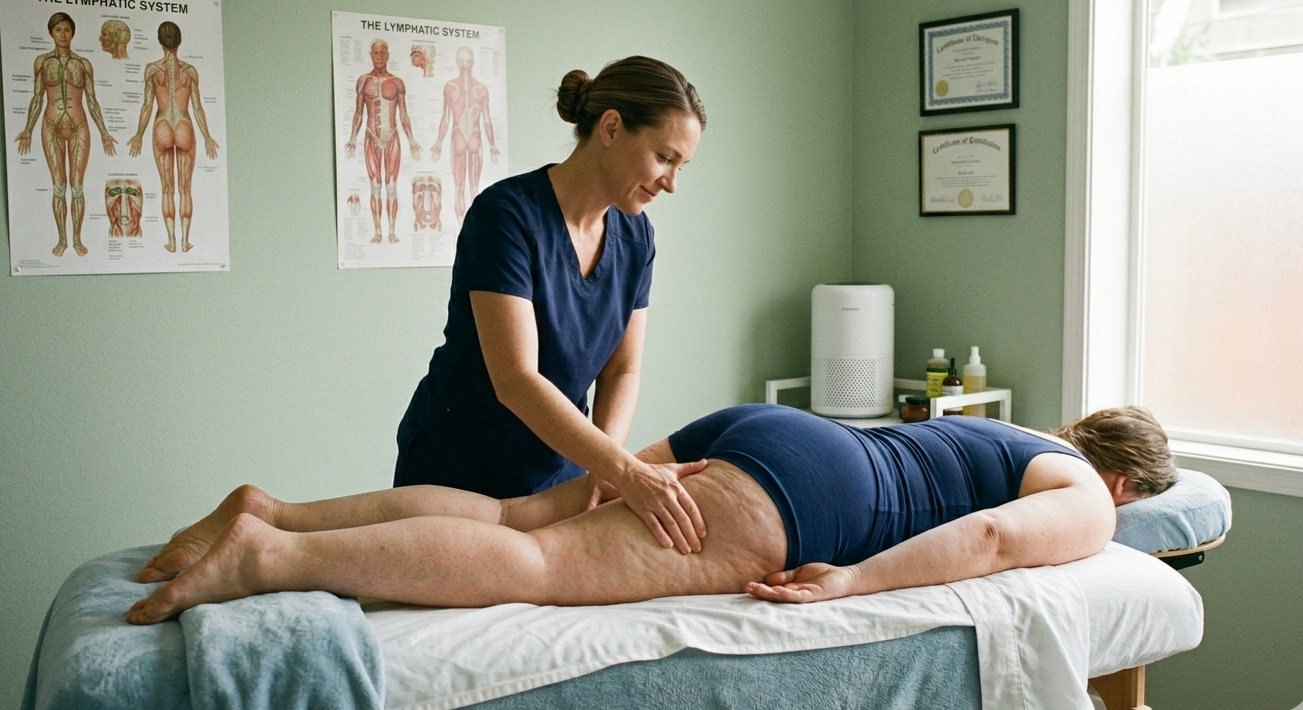
Currently, conventional treatments for lipedema primarily include conservative measures like manual lymphatic drainage through lymphatic massage, compression, and in some cases tumescent lymph-sparing liposuction with a surgeon specializing in lipedema.
Compression and Lymphatic Massage
Seeing a qualified occupational therapist with experience in lipedema can sometimes make a big difference in the symptoms patients with lipedema feel every day. This is typically coupled with the use of compression garments. If you have tried compression on your own and been disappointed, getting fit for your body with the right degree of compression for your needs may be more effective.
By limiting the swelling, patients often feel less heaviness in their legs, less pain, and improved quality of life. Studies have shown that these conservative therapies can reduce bruising, pain, and leg circumference when combined with exercise. [1] Not everyone sees significant changes with compression and lymphatic massage, but it’s often worth a try.
Surgery
Though surgery doesn’t “cure” lipedema, it is often considered the most complete treatment for lipedema that we currently have if conservative measures are not effective at controlling symptoms. Liposuction has been shown to reduce progression, improve quality of life, and have sustained reductions in pain and swelling. Though people are often concerned with whether symptoms will return, multiple studies have shown maintained results for at least 8 years. [2,3] It is often performed over multiple surgeries and in some cases is covered or partially covered by insurance.
Whether you choose to have surgery or not, treatment options don’t need to end here.
Lifestyle Foundations
You may have heard that “diets don’t work” and “exercise won’t change it,” or perhaps you have spent your life trying every diet out there without results, but that doesn’t mean nutrition and exercise don’t matter. Lipedema fat is not caused by a poor diet or insufficient exercise fundamentally, but both can have a profound impact on inflammation and metabolic health. Foods can be targeted that have real benefits to the lymphatic and vascular health for example.
Nutrition
In general, an anti-inflammatory diet targeting whole, less processed foods can have positive a positive impact on lipedema. Ketogenic or Rare Adipose Disorders (RAD) diets have demonstrated reduced pain and swelling.[3] However, navigating nutrition and exercise in lipedema still needs to be individualized. Many people do not find a ketogenic diet sustainable, and monitoring impact on cardiovascular risk markers is imperative.
It is common for people with lipedema to have struggled with eating disorders and we need to be strategic and mindful about restrictions. In a world where many women constantly feel pressure to eat less and take up less space, let’s reframe our mindset into asking “what is serving us?”
Exercise & Movement
Exercise might look different depending on your stage and physical limitations, and simply what you enjoy doing. There are specific studies in exercises like swimming and underwater cycling in lipedema, but if you don’t enjoy swimming or don’t have access, don’t fret! [3] Movement that helps squeeze those lower leg muscles, driving vascular and lymphatic flow is important, but there are all kinds of ways to achieve that. Avoid the messaging about absolute “don’ts” regarding certain exercise in lipedema. We can tailor a plan to an individual’s needs and desires, while also being mindful of things like knee osteoarthritis or pain exacerbations.
These lifestyle factors are fundamental for every lipedema patient.
Treat the Whole Person
Lipedema doesn’t happen in a vacuum. Addressing conditions that are influencing lipedema drivers like hormones, inflammation, vascular and lymphatic health are critical. It’s important to not assume that all symptoms that could be lipedema are all caused by the lipedema.
The psychological impact of a lifetime of lipedema cannot be ignored. Therapy when needed, community support, and providers who understand the condition are pillars we need to move the experience of living with lipedema to one where patients can feel understood, supported, and optimistic in their treatment journeys.
A deeper dive into treatments can be found in the Therapies section of the Lipedema Library.
Sources
- Czerwińska M, Teodorczyk J, Spychała D, Hansdorfer-Korzon R. The usefulness of the application of compression therapy among lipedema patients-pilot study. Int J Environ Res Public Health. 2023;20(13):6234.
- Sandhofer M, Hanke CW, Habbema L, et al. Prevention of progression of lipedema with liposuction using tumescent local anesthesia: results of an international consensus conference. Dermatol Surg. 2020;46(2):220-228.
- Vazirnia A, Smart DR, Mohseni Y, Amron DM. Lipedema diagnosis, clinical manifestations, and therapeutics: a systematic review. Int J Dermatol. 2026;65(3):301-315.