
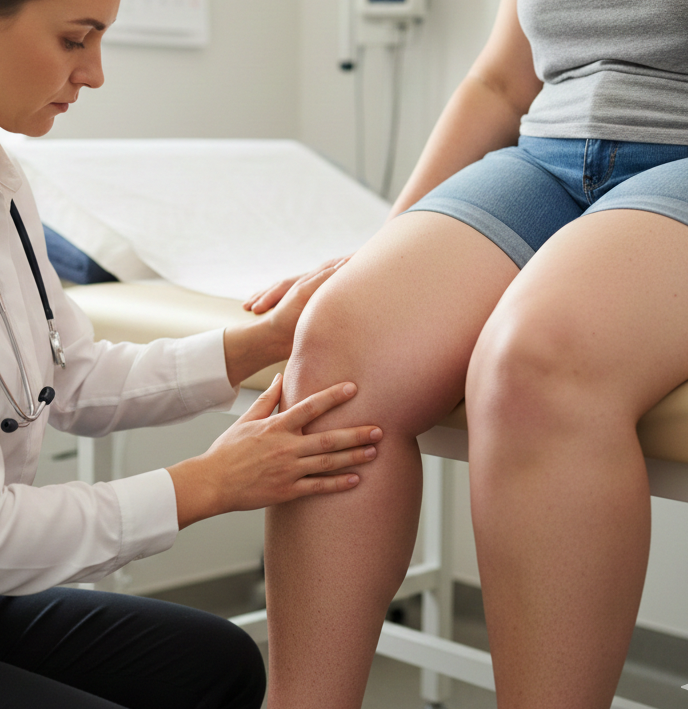
How is lipedema diagnosed?
Though there has been research to find a lipedema-specific biomarker, at this time there is not a specific lab test or imaging test that can diagnose lipedema. Some labs and imaging may be helpful to evaluate inflammation or look at the blood vessels or lymphatic system in greater detail. Lipedema is diagnosed when a patient fits the clinical criteria of lipedema and other conditions are ruled out, or in some cases diagnosed in addition to lipedema.
Diagnostic Criteria
Currently, lipedema is typically diagnosed based on the presence of core clinical features including:
- Bilateral, symmetrical fat deposition predominantly affecting the lower extremities (buttocks, hips, thighs, and legs), sparing the feet and hands
- Pain and tenderness in affected areas
- Easy bruising without significant trauma
- Lack of response to diet and exercise for the disproportionate fat distribution
- Female predominance with onset typically during or after hormonal changes including puberty, pregnancy, and menopause
Other signs and symptoms that support the diagnosis include:
- Negative Stemmer’s sign (a sign of lymphedema which could be present in addition to lipedema)
- Nodular texture of affected adipose tissue
- Varicosities
- Skin is cool to the touch
Lipedema is heterogenous– not all patients have the same symptoms! Not only do people experience varying degrees of symptoms like pain and swelling, there are different types and stages.
What conditions can look similar to lipedema?
One of the primary diagnostic challenges of lipedema is identifying conditions that can be confused with lipedema or can coexist. A few examples include:
- Lymphedema (impairment of the lymphatics resulting in swelling of the legs, often including the feet)
- Venous insufficiency (valves in veins don’t work well and blood doesn’t flow as well back to the heart)
- Obesity (lifestyle-related or other medical conditions contributing to difficulty losing weight)
- Other adipose-tissue disorders (Dercum’s, Madelung’s, Familial Multiple Lipomatosis)
- Systemic diseases that can cause leg swelling
How is lipedema treated?
Currently there is not a cure for lipedema, however there are many treatments available to help reduce progression, improve quality of life and symptoms!
Treatments are discussed in greater detail on other pages and can include lymphatic support like massage and compression garments, lymph-sparing liposuction, nutrition and exercise strategies, and certain medications and supplements can be helpful for some people.
Still wondering if your symptoms are consistent with lipedema?
[button url=”https://lipedemand.com/do-i-have-lipedema/” label=”TAKE THE QUIZ!” color=”#555987″ target=”_blank”]Or learn about how to schedule a lipedema consultation with Dr. Clark here.